




Fresh bread has a very short window of perfection.
One day, the crust is crisp, the inside is soft, and every slice tastes exactly as it should. A day or two later, the same loaf can turn dry, chewy, or strangely damp depending on how it was stored.
The frustrating part is that the usual advice can feel contradictory. Leave bread exposed and it dries out. Seal it too tightly and moisture builds up. Put it in the refrigerator and it may seem protected, yet the texture can become stale surprisingly quickly.
The best way to keep bread fresh is not simply to “keep air out.” You need to control airflow, moisture, temperature, and storage time at the same time.
Here is a practical way to do that without ending up with soggy slices.
The First Question: What Kind of Bread Are You Storing?
Not all bread should be treated the same way.
A crusty sourdough loaf has very different storage needs from soft sandwich bread. A baguette behaves differently from brioche. Bread made with more fat, sugar, or preservatives often stays soft longer than a rustic loaf with a crisp crust.
That means there is no single storage method that works perfectly for every loaf.
A useful rule is this:
The softer the bread, the more protection it needs from drying out.
The crispier the crust, the more airflow it needs.
This one idea explains most bread-storage decisions.
For Crusty Bread, Do Not Seal It Too Quickly
A freshly baked artisan loaf may still contain a lot of internal moisture.
If you place it directly into a fully sealed plastic bag while it is still warm, that moisture has nowhere to go. Condensation can form inside the bag, and the crust that was once crisp may turn soft or rubbery.
For sourdough, baguettes, ciabatta, and other crusty breads, allow the loaf to cool completely before storing it.
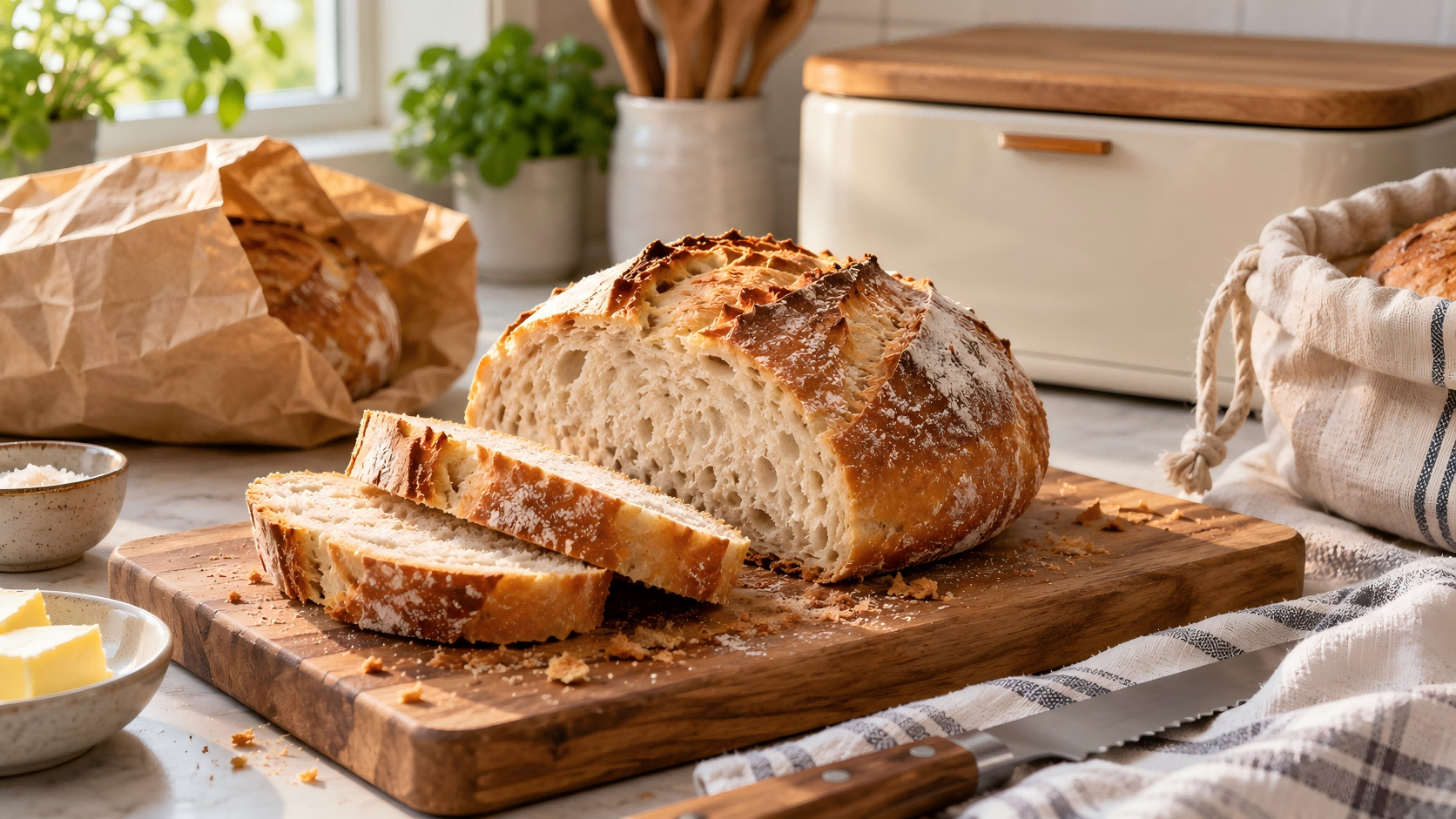
Once cool, a paper bag, bread box, or loosely wrapped cloth can work well for short-term storage.
These options provide some protection from drying while still allowing enough airflow to keep the crust from becoming damp.
If you plan to eat the bread within a day or two, this is often the best approach.
Soft Sandwich Bread Needs More Moisture Protection
Soft bread behaves differently.
If you leave sandwich bread in a paper bag, it can dry out quickly.
For this type of bread, the original plastic packaging is often perfectly practical. A sealed bread bag helps prevent moisture loss and keeps the slices soft.
The important detail is to keep the bread away from heat and direct sunlight.
Store it in a cool, dry place such as a pantry or cabinet.
If the room is warm or humid, check the loaf regularly because trapped moisture can also increase the chance of mold.
So while plastic is often a poor choice for preserving the crust of artisan bread, it can be exactly what soft sandwich bread needs.
A Bread Box Is More Useful Than It Looks
Bread boxes are not just decorative kitchen accessories.
A good bread box creates a middle ground between leaving bread completely exposed and sealing it in plastic.
It limits airflow enough to slow drying but still allows some ventilation so excess moisture can escape.
That makes it especially useful for:
- sourdough
- bakery loaves
- rolls
- homemade bread
- bread you expect to eat within a few days
Do not overcrowd the bread box.
Several warm or moist loaves packed tightly together can create a humid environment.
The box should also be kept clean and dry. Crumbs and lingering moisture can encourage mold growth over time.
Why Refrigerating Bread Usually Isn’t the Best First Choice
Many people assume the refrigerator will automatically make bread last longer.
It may slow mold growth, but it can also make bread go stale faster.
Staling is not simply the bread “drying out.” Changes in the starch structure can make the crumb feel firm and stale even when the bread still contains moisture.
Cool refrigerator temperatures can accelerate that texture change.
As a result, a loaf stored in the refrigerator may remain mold-free but become disappointing to eat.
For most bread, room-temperature storage is better when you expect to finish it within a few days.
There are exceptions.
If your kitchen is extremely hot and humid, refrigeration may sometimes be useful to reduce mold risk. Just expect some texture loss, and consider toasting the bread before eating it.
The Biggest Mistake: Storing Bread While It Is Still Warm
This is especially important with homemade bread.
Fresh bread smells so good that it is tempting to slice it immediately and put away the leftovers while they are still warm.
Try to resist.
Warm bread continues releasing steam as it cools.
If you wrap it tightly, that steam turns into condensation. Moisture collects on the crust or inside the bag, creating exactly the soft, damp texture you are trying to avoid.
Let the loaf cool completely on a rack before storing it.
Depending on the size and style of bread, this may take an hour or longer.
Proper cooling is one of the easiest ways to improve storage quality.
Should You Store Bread Cut-Side Down?
For a rustic loaf that has already been sliced, placing the cut side down on a clean cutting board can work surprisingly well for short periods.
The exposed interior is the part most vulnerable to drying.
By placing the cut side against a flat surface, you reduce airflow to the crumb while allowing the crust to remain exposed.
This method works best when you plan to finish the loaf relatively soon.
It is not ideal for long-term storage, but for a sourdough loaf eaten over one or two days, it can be simple and effective.
Cloth Bags: Good for Some Bread, Not All Bread
Reusable cloth bread bags are popular because they are breathable and easy to use.
They can work nicely for crusty loaves because they reduce moisture loss without trapping as much humidity as plastic.
However, they may not keep very soft bread fresh for as long.
A sandwich loaf stored in cloth can lose moisture faster than one stored in plastic.
Again, the right choice depends on texture.
Think of cloth as a compromise: more breathable than plastic, more protective than leaving bread uncovered.
Paper Bags Are Best for Short-Term Use
Paper bags help maintain a dry crust, which makes them useful for bakery bread.
But they do not stop moisture from escaping very well.
Leave bread in paper too long and the interior may become dry and hard.
That is why paper bags work best when the bread will be eaten quickly.
For example, if you buy a baguette in the morning and plan to finish it at dinner, the paper bag is fine.
If you hope to keep that baguette for four days, freezing will usually give you a much better result.
Freezing Is the Best Option for Longer Storage
If you know you will not finish the loaf in a few days, freezing is usually the smartest choice.
Bread freezes very well.
And unlike refrigeration, freezing slows the changes that make bread stale.
For convenience, slice the bread before freezing.
That way, you can remove only what you need instead of thawing the whole loaf.
A simple method is:
- Let the bread cool completely.
- Slice it if necessary.
- Wrap it tightly or place it in a freezer-safe bag.
- Remove as much excess air as possible.
- Freeze it.
If slices tend to stick together, you can place small sheets of parchment paper between them.
For everyday use, frozen bread can go directly into a toaster.
Larger pieces can be thawed at room temperature and refreshed in the oven.
How to Refresh Bread That Has Gone Slightly Stale
A slightly stale loaf is not necessarily ruined.
Crusty bread can often be revived with a little heat.
Lightly dampen the exterior with water, then place the bread in a warm oven for several minutes.
The heat can help restore some crispness to the crust and improve the interior texture.
Do not soak the loaf.
You only need a small amount of surface moisture.
This works especially well for baguettes and artisan breads.
Soft sandwich bread is different. Toasting is usually the simplest way to improve slices that have lost some freshness.
Avoid Storing Bread Near Heat-Producing Appliances
Where you store bread matters more than people often realize.
Do not keep it directly beside:
- the oven
- the stove
- a toaster
- a dishwasher
- a sunny window
These areas can become warmer and more humid throughout the day.
Heat encourages mold and can affect texture.
A stable, cool pantry shelf is usually better.
The same applies to the top of a refrigerator. It may seem convenient, but that area can become warmer than the rest of the kitchen.
Humidity Changes Everything
Bread can behave very differently depending on where you live.
In a dry climate, bread may lose moisture quickly and become hard.
In a humid climate, mold and sogginess become bigger concerns.
If your home is humid, breathable storage becomes more important for crusty bread.
You may also need to freeze bread sooner rather than trying to keep it at room temperature for several days.
In a very dry environment, slightly more protective wrapping may help prevent moisture loss.
There is no perfect universal rule because the kitchen environment plays a major role.
Do Not Mix Warm Bread With Older Bread
If you bake or buy multiple loaves, avoid placing fresh warm bread into the same container as older bread.
The fresh loaf releases moisture, which can raise humidity inside the container.
The older bread may then become soft or mold more quickly.
Let new bread cool completely before storing it with anything else.
It is also worth checking older bread before placing new bread nearby.
If one loaf is beginning to mold, spores may spread to other bread in the same storage area.
Keep Your Bread Storage Area Clean
Bread boxes, reusable bags, and storage containers should be cleaned regularly.
Crumbs may seem harmless, but they can retain moisture and provide a place for mold to grow.
Every so often:
- empty out crumbs
- wipe down the bread box
- wash reusable bread bags
- allow containers to dry completely
Do not place fresh bread into a damp container.
A clean, dry storage environment helps bread stay fresh longer.
What Should You Do With Half a Loaf?
This is where many people overcomplicate things.
If you have half a loaf left and expect to eat it tomorrow, keep it at room temperature using a method suited to the bread.
For crusty bread, store it cut-side down or loosely wrapped.
For soft bread, return it to its bag and seal it.
If you are not sure you will finish it within the next couple of days, freeze it.
Freezing earlier is usually better than waiting until the bread is already stale.
A Simple Bread Storage Routine
You do not need a complicated system.
For most households, this routine works well:
Crusty bread:
Cool completely, then use a bread box, paper bag, or breathable wrap. Eat within a couple of days or freeze.
Soft sandwich bread:
Keep it sealed in its original bag or another airtight bag at room temperature.
Homemade bread:
Cool completely before storing. Choose breathable or sealed storage based on the crust you want to preserve.
Bread you will not finish soon:
Slice it and freeze it.
The most important thing is matching the storage method to the type of bread.
Final Thoughts
Keeping bread fresh is really about balance.
Too much airflow dries it out.
Too little airflow can trap moisture and soften the crust.
Too much heat encourages mold.
And keeping bread for too long at room temperature eventually reduces quality no matter how carefully you store it.
For crusty bread, allow some airflow.
For soft bread, protect it from moisture loss.
And when you know you will not finish a loaf quickly, freeze it while it is still fresh.
That simple habit makes a bigger difference than almost any storage trick.
The goal is not to make bread last forever.
It is to keep tomorrow’s slice tasting as close as possible to today’s.