





Cooked rice is one of those leftovers that seems simple to store. You make a little too much for dinner, put the rest in the refrigerator, and plan to use it later for fried rice, a quick lunch, or another meal.
But after a few days, a common question comes up: is it still safe to eat?
As a general rule, cooked rice should be used within 3 to 4 days when stored properly in the refrigerator. The refrigerator should be kept at 40°F (4°C) or below, and the rice should be chilled promptly after cooking. USDA guidance specifically lists cooked rice and pasta as foods that generally keep for 3 to 4 days in the refrigerator.
The number of days matters, but how you handle the rice before it goes into the fridge matters just as much.
Why Cooked Rice Needs Careful Storage
Dry uncooked rice can sit in the pantry for a long time, so it is easy to assume that cooked rice is equally forgiving.
It is not.
Once rice has been cooked, it contains plenty of moisture and becomes much more suitable for bacterial growth if it is kept at unsafe temperatures.
One food-safety concern associated with cooked rice is Bacillus cereus. This bacterium can be present in starchy foods such as rice, and some of its spores may survive normal cooking. If cooked rice then remains warm or at room temperature for too long, those spores can grow and potentially produce toxins. FDA food-safety materials specifically identify rice as one of the starchy foods associated with this hazard.
This is why refrigerating rice promptly is more important than simply asking how many days it has been in the refrigerator.
A bowl of rice that was cooled and stored correctly is very different from rice that spent most of the afternoon sitting on the kitchen counter before being refrigerated.
The 3-to-4-Day Rule
For properly refrigerated cooked rice, a practical limit is three to four days.
Suppose you cook rice on Monday evening and refrigerate the leftovers soon afterward. Ideally, you would use them by Thursday or Friday rather than keeping them through the weekend.
This recommendation is consistent with broader USDA guidance for cooked leftovers, which says most leftovers can be refrigerated for three to four days.
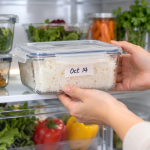
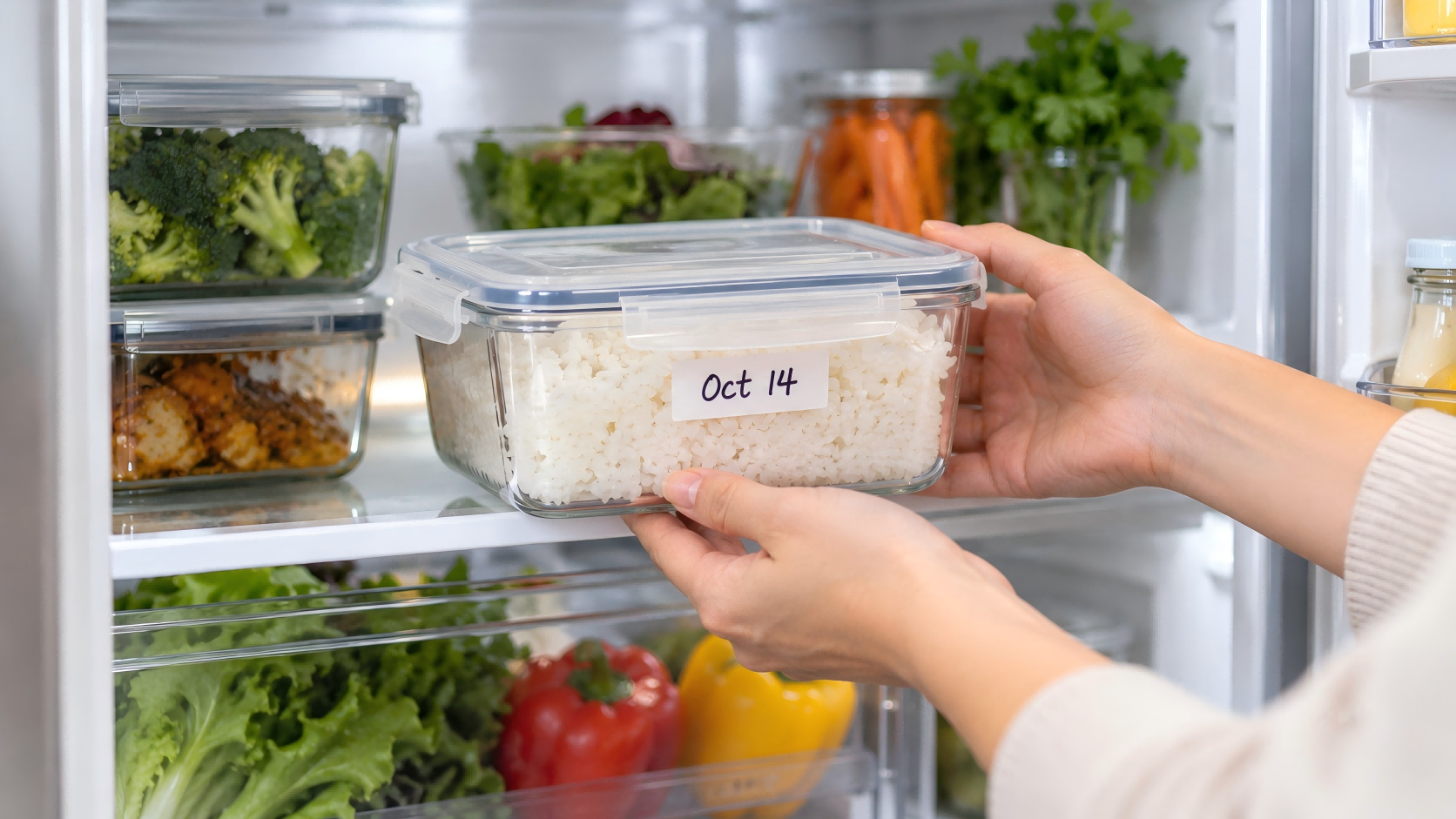
It can help to write the cooking date on the container if you regularly prepare food in advance. Once several containers are in the refrigerator, it is surprisingly easy to forget which one was cooked first.
And if you genuinely cannot remember how old the rice is, throwing it away is safer than guessing.
Don’t Leave Cooked Rice Out for Hours
The clock starts before the rice reaches the refrigerator.
FDA and CDC guidance recommends refrigerating cooked and other perishable foods within two hours. If the surrounding temperature is above 90°F (32°C), that window drops to one hour.
That means leaving a rice cooker on the counter all afternoon and refrigerating the leftovers at night is not a good storage strategy unless the appliance is actively keeping the rice safely hot.
The same applies after a meal.
It is easy to finish dinner, leave the dishes on the table, watch a movie, and deal with the leftovers later. With cooked rice, it is better to put away what you are keeping fairly quickly.
You do not have to wait until the rice becomes completely cold before it goes into the refrigerator.
In fact, waiting several hours for a large pot of rice to cool at room temperature can create more risk than refrigerating it promptly.
How to Cool Cooked Rice Properly
The goal is to get leftover rice cold relatively quickly.
Instead of leaving a large, deep pot of rice to cool slowly, transfer the leftovers into smaller or shallower containers.
A shallow container gives the rice more surface area and allows heat to escape faster.
Both FDA and USDA food-safety guidance recommend dividing larger quantities of leftovers into shallow containers to promote rapid cooling.
You also do not need to pack the rice tightly into a giant container.
If you have made a large batch for meal prep, splitting it among several containers is usually more practical. It cools faster, and you can later remove only the portion you need.
Once the rice has been portioned, cover it and place it in the refrigerator.
Use an Airtight Container
Once rice has cooled, keeping it covered helps protect both its quality and its safety.
An airtight food-storage container is a good choice.
Properly wrapping or covering leftovers helps prevent contamination, reduces moisture loss, and stops the rice from absorbing odors from other foods in the refrigerator. USDA recommends storing leftovers in airtight packaging or sealed containers.
Good storage also improves texture.
Rice that is left uncovered in the refrigerator tends to dry out quickly. After a day or two, the grains can become hard and unpleasant even if the rice has not technically exceeded the recommended storage period.
What Temperature Should Your Refrigerator Be?
Cooked rice should be stored in a refrigerator maintained at 40°F (4°C) or colder.
A refrigerator may feel cold without actually maintaining a safe temperature consistently.
If you are unsure, an inexpensive refrigerator thermometer can tell you more accurately.
CDC and FDA recommend maintaining the refrigerator at 40°F or below because bacterial growth slows substantially at cold temperatures.
Avoid leaving the refrigerator door open for long periods, especially in warm weather.
It is also better not to place large amounts of hot food so tightly together that cold air cannot circulate around the containers.
How Can You Tell If Cooked Rice Has Gone Bad?
Spoiled rice can sometimes give you obvious warning signs.
You may notice an unusual smell, visible mold, excessive sliminess, or changes in color or texture.
If you see mold, discard the entire portion rather than trying to remove the affected area.
However, appearance and smell are not perfect safety tests.
Food can sometimes contain harmful bacteria or toxins without looking dramatically different. That is why storage time and temperature are more reliable than simply smelling the rice.
Do not taste questionable rice to decide whether it is safe.
If it has been stored longer than recommended, sat out for too long, or you are unsure how it was handled, replacing it with a fresh batch is the safer choice.
Can Cooked Rice Last Five Days in the Fridge?
You will sometimes hear people say they routinely keep rice for five, six, or even seven days without problems.
That does not change the recommended food-safety window.
Official USDA guidance places cooked rice at about three to four refrigerated days.
Food-safety recommendations are not predictions that food becomes dangerous at exactly midnight on the fourth day.
They are practical limits designed to reduce risk.
Storage conditions vary between households, refrigerators fluctuate in temperature, and food may have spent different amounts of time outside refrigeration.
For that reason, extending the storage time simply because the rice still looks normal is not a particularly useful habit.
If you know you will not eat it within a few days, freezing it is a better option.
Can You Freeze Cooked Rice?
Yes.
Cooked rice freezes surprisingly well, making freezing useful if you prepare large batches.
Allow the rice to cool promptly, divide it into practical serving sizes, and place those portions into freezer-safe containers or bags.
Removing excess air can help reduce freezer drying.
USDA notes that cooked leftovers can generally be frozen for several months, although quality gradually declines during long storage.
For everyday use, you do not need to keep frozen rice for months at a time.
Freezing individual portions and using them over the following few weeks is convenient and usually preserves good texture.
A flat freezer bag also takes up less space and tends to thaw more evenly than one large frozen block.
How Should You Thaw Frozen Rice?
You can thaw rice in the refrigerator before reheating it.
If you need it more quickly, a microwave is also practical.
USDA considers the refrigerator, cold water, and microwave appropriate methods for thawing leftovers. Food thawed in a microwave should be heated as part of the thawing process rather than being left partially warm afterward.
In many cases, rice does not need to be completely thawed first.
Frozen portions can often go directly into the microwave or into a covered pan with a small amount of water.
The added moisture helps soften grains that became dry during freezing.
How to Reheat Refrigerated Rice
Rice should be reheated until it is hot throughout.
USDA and FDA guidance for leftovers recommends reheating to an internal temperature of 165°F (74°C).
The microwave works well, but rice can heat unevenly.
Break up large clumps, add a spoonful of water if the rice seems dry, cover it loosely, and stir partway through heating.
Then make sure the entire portion is steaming hot rather than only the edges.
You can also reheat rice in a pan. A small amount of water and a lid can help restore moisture.
For fried rice, heating it thoroughly in a hot pan works well, provided the rice was stored safely before cooking.
Does Reheating Make Old Rice Safe Again?
No.
Reheating is not a way to reset the storage clock.
This is particularly important with foods associated with toxin-producing bacteria.
Cooking and reheating can kill many living bacteria, but some toxins produced while food was improperly stored may be heat-resistant. FDA materials note that Bacillus cereus associated with rice can produce toxins, including heat-stable toxins.
So if rice sat at room temperature for an unsafe amount of time, putting it in the refrigerator and reheating it the next day does not necessarily make the earlier handling problem disappear.
Safe storage needs to happen from the beginning.
What About Takeout Rice?
The same basic rules apply to rice from a restaurant.
If you bring home leftover rice, refrigerate it promptly.
USDA advises refrigerating restaurant or home-cooked leftovers within two hours and using properly stored leftovers within three to four days.
The challenge with takeout is that you may not know exactly when the food was prepared.
If the meal spent a long time being transported, sitting in a warm car, or remaining on the table during dinner, take that extra time into account.
Putting leftovers into the fridge promptly after the meal is the safest routine.
What About Fried Rice?
Fried rice deserves the same level of attention as plain rice.
In fact, its usual preparation makes proper storage especially important because fried rice is often made from previously cooked rice.
If you plan to make fried rice tomorrow, cook the rice today and refrigerate it promptly.
Do not leave it sitting on the countertop overnight to dry.
Cold refrigerated rice works perfectly well for fried rice because some moisture leaves the grains during refrigeration, helping them separate when fried.
Once you prepare the fried rice, treat it as a new cooked leftover and refrigerate any extra portions promptly.
A Simple Routine for Storing Leftover Rice
You do not need a complicated system.
After the meal, transfer the rice you want to keep into shallow containers, refrigerate it within two hours, keep your refrigerator at 40°F or below, and plan to eat the rice within three to four days. If you will not use it in that time, freeze it instead.
When reheating, heat only the amount you actually plan to eat and make sure it reaches 165°F throughout.
Those few habits handle most of the important food-safety concerns.
Final Thoughts
So, how long does cooked rice last in the fridge?
For properly handled rice, three to four days is the recommended refrigerated storage period.
But the storage time is only half the story.
Rice should also be cooled promptly, refrigerated within two hours, kept at 40°F or below, and reheated thoroughly before eating. If it was left at room temperature for several hours or you cannot remember when it was cooked, it is better not to take a chance.
Cooked rice is inexpensive and easy to replace.
With quick cooling, sensible portions, and a simple date label on the container, you can safely turn today’s extra rice into tomorrow’s lunch instead of tomorrow’s mystery leftover.