






A closet full of clothes does not always make getting dressed easier.
In fact, having too many choices can make mornings more frustrating. You may own dozens of shirts, several pairs of jeans, and a collection of shoes, yet still feel as though you have nothing to wear.
A capsule wardrobe offers a simpler approach.
Instead of filling your closet with pieces that only work for one occasion or one outfit, you build a smaller collection of clothing that works well together. The goal is not to own as little as possible. It is to own enough of the right things so that getting dressed becomes easier.
For beginners, a capsule wardrobe can also help reduce impulse purchases, make personal style clearer, and create a closet that feels more organized.
You do not need to replace everything you own to get started. In most cases, the best capsule wardrobe begins with what is already in your closet.
What Is a Capsule Wardrobe?
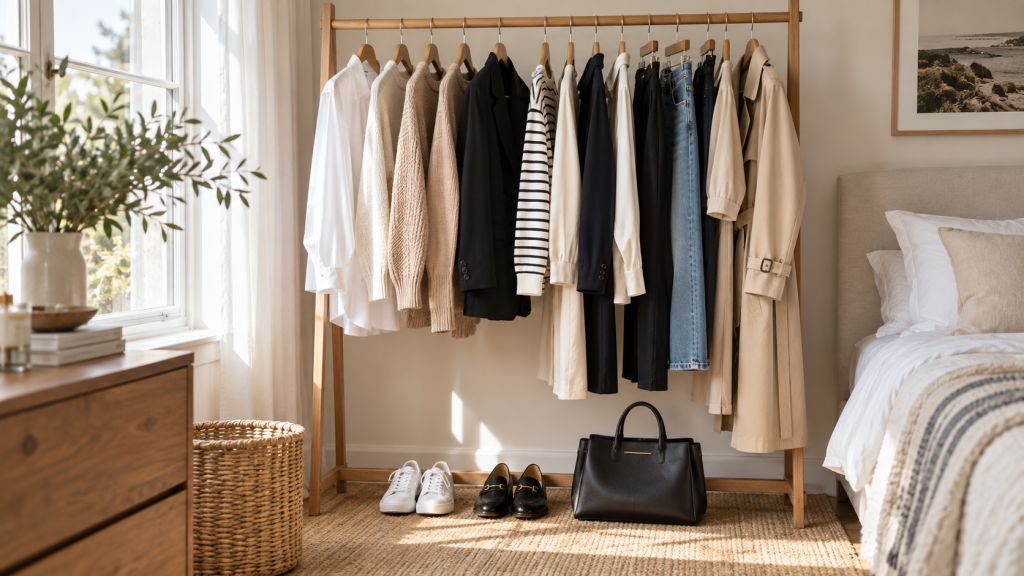
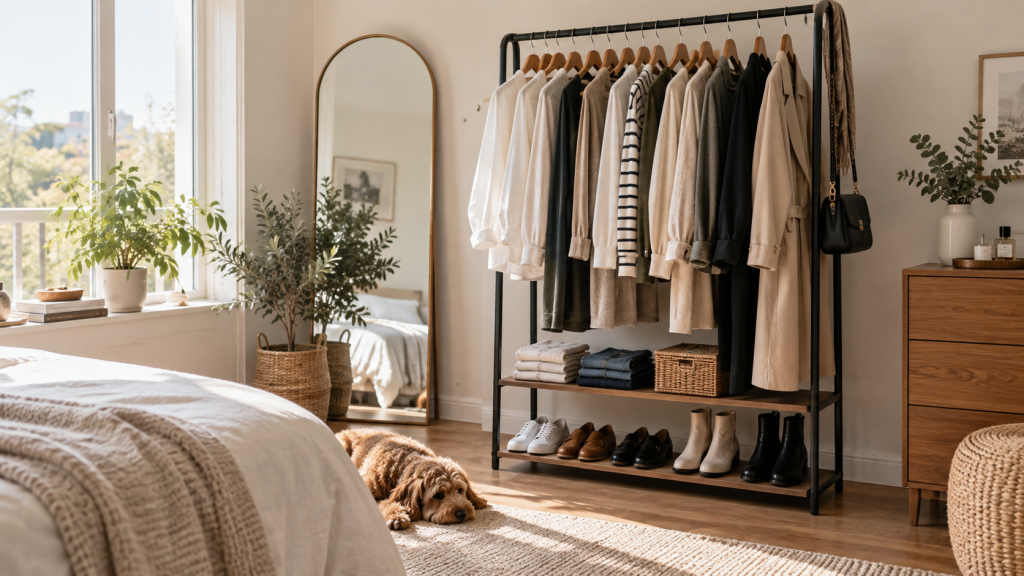
A capsule wardrobe is a curated collection of clothing that can be mixed and matched to create many different outfits.
Most capsule wardrobes focus on versatile basics, a limited color palette, and pieces that suit your everyday lifestyle.
There is no official number of items you must own.
Some people create capsules with 25 pieces. Others use 30, 40, or more. Shoes, coats, workout clothes, underwear, and special-occasion clothing may or may not be included depending on the system.
The number is less important than the principle.
Each item should have a clear purpose and work with several other pieces in your wardrobe.
A good capsule wardrobe should make your life easier, not force you to follow strict rules.
Start With Your Real Life
Before thinking about colors or shopping lists, look at how you actually spend your time.
A wardrobe should support your lifestyle.
Someone who works in a formal office may need tailored trousers, button-down shirts, and structured jackets. Someone who works from home may rely more on comfortable knitwear, jeans, casual dresses, and simple layers.
Think about a typical week.
How many days do you spend at work?
How often do you go out socially?
Do you walk a lot?
Do you need clothing for school runs, meetings, travel, restaurants, or outdoor activities?
Your capsule should reflect those realities.
A useful exercise is to divide your week into categories.
For example:
- 50% casual everyday clothing
- 30% workwear
- 15% social outfits
- 5% dressier occasions
Your own percentages may look completely different.
This step prevents one of the biggest wardrobe mistakes: buying clothes for an imagined lifestyle rather than the one you actually live.
Take Everything Out of Your Closet
Building a capsule wardrobe is much easier when you can see what you already own.
Take your everyday clothing out of the closet and place it somewhere you can examine it.
You do not necessarily need to empty every drawer in the house. Start with the categories you wear most often, such as tops, bottoms, dresses, jackets, and shoes.
Then divide the clothes into several groups:
- wear regularly
- like but rarely wear
- needs repair or alteration
- seasonal
- no longer fits your lifestyle
- unsure
Do not rush to throw things away.
The purpose of this step is to understand your wardrobe, not to get rid of half of it in one afternoon.
You may discover that you already have many useful basics.
You may also notice patterns.
Perhaps you own twelve printed tops but only one pair of trousers that works with them. Or maybe you keep buying black jackets even though you already have four.
Seeing everything together makes these patterns much easier to recognize.
Identify Your Most-Worn Pieces
Look at the clothes you wear repeatedly.
These pieces tell you more about your real style than a Pinterest board or fashion trend ever could.
Ask yourself why you reach for them.
Is it the fit?
The fabric?
The color?
The comfort?
The way they combine with other clothes?
You may notice that you consistently choose straight-leg jeans, soft crew-neck sweaters, oversized shirts, or simple midi dresses.
These are useful clues.
Your capsule wardrobe should be built around pieces that already work for you.
It does not need to look like someone else’s version of minimalism.
If you love color, your capsule can contain color.
If you rarely wear blazers, you do not need one simply because it appears on every wardrobe checklist.
Choose a Practical Color Palette
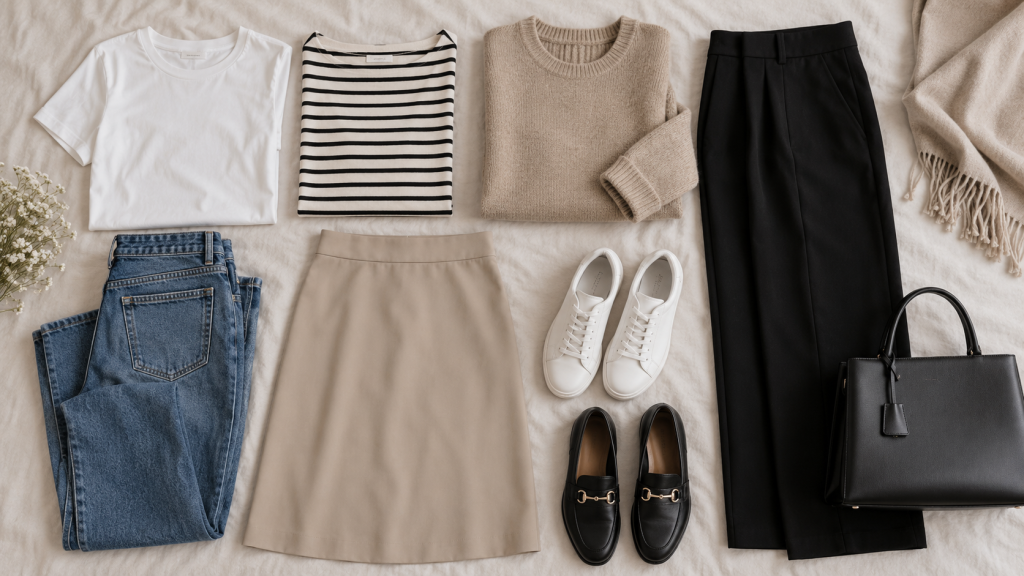
A limited color palette makes mixing outfits much easier.
This does not mean everything needs to be beige, white, or black.
Start by choosing two or three base colors.
Common base colors include:
- black
- navy
- gray
- beige
- brown
- cream
- white
Then add a few accent colors you genuinely enjoy wearing.
For example, someone might build a wardrobe around navy, cream, and denim, with burgundy and olive as accent colors.
Another person might prefer black, white, and camel with red and cobalt blue.
The easiest way to choose your palette is to look at the clothes you already wear most often.
If most of your favorite items are navy and gray, there is little reason to suddenly build your wardrobe around warm brown.
Your colors should also work reasonably well together.
You do not need every single item to match every other item, but you should be able to create several combinations without much effort.
Build Around Reliable Basics
Basics form the foundation of most capsule wardrobes.
They are not necessarily boring. They are simply pieces that can be styled in several ways.
A beginner’s wardrobe might include items such as:
- plain T-shirts
- a button-down shirt
- a comfortable sweater
- straight-leg or relaxed jeans
- neutral trousers
- a simple skirt
- a casual dress
- a cardigan
- a lightweight jacket
- a blazer or structured layer
- everyday sneakers
- versatile flats or loafers
You do not need every item on this list.
Someone who never wears skirts can leave them out. Someone living in a warm climate may need very little knitwear.
Think in terms of function rather than rules.
The best basics are the ones you actually use.
Pay Attention to Fit
A simple item can look excellent if it fits well.
The opposite is also true.
An expensive jacket that pulls at the shoulders or trousers that constantly slide down will rarely become wardrobe favorites.
When reviewing clothes, pay attention to how they feel throughout the day.
Can you sit comfortably?
Do you keep adjusting the waistband?
Does the shirt stay in place?
Do you like how the sleeves fall?
Good fit does not mean clothing must be tight or tailored.
It simply means the garment works with your body and feels comfortable enough that you want to wear it.
Minor alterations can also make a big difference.
Shortening trousers, adjusting a waist, or changing a button position may turn an almost-right piece into something you wear regularly.
Focus on Outfit Combinations
A capsule wardrobe becomes useful when pieces work together.
Instead of asking, “Do I like this shirt?” ask, “What can I wear this shirt with?”
Ideally, a new item should work with several things you already own.
For example, a simple blue shirt might work with:
- jeans
- black trousers
- a beige skirt
- shorts
- under a sweater
- beneath a blazer
That flexibility makes it valuable.
A highly distinctive top that only works with one pair of trousers may still be worth owning if you love it, but your wardrobe becomes harder to manage when too many pieces have that limitation.
Create a Small Outfit Formula
Outfit formulas can save a surprising amount of time.
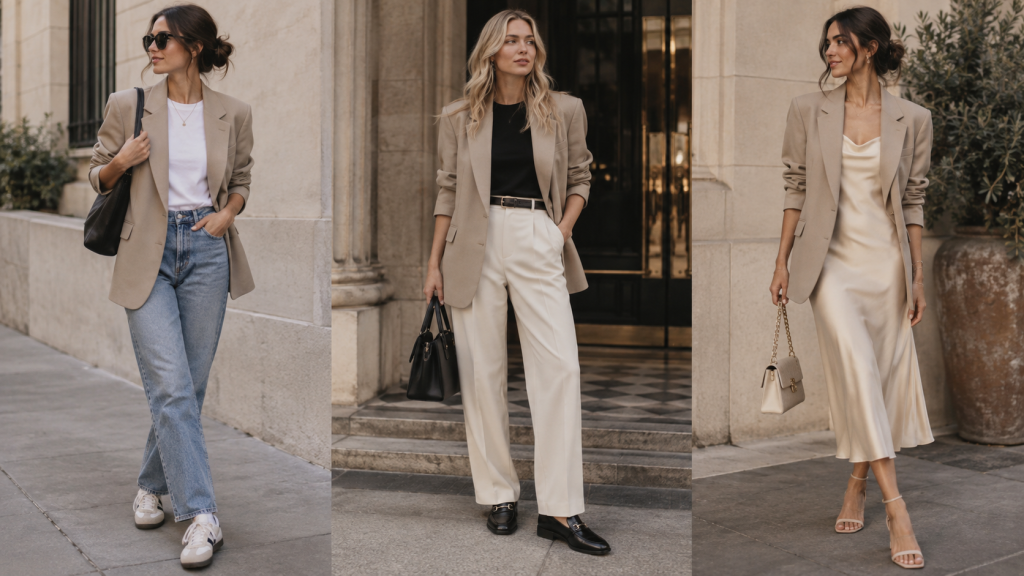
An outfit formula is simply a combination that consistently works for you.
Examples include:
T-shirt + jeans + jacket + sneakers
Button-down shirt + trousers + loafers
Sweater + midi skirt + ankle boots
Simple dress + cardigan + flats
Once you know your formulas, you can change the colors, fabrics, and accessories without reinventing the entire outfit.
This is especially helpful on busy mornings.
You already know the structure works.
You only need to choose the individual pieces.
Do Not Buy Everything at Once
Once you begin organizing your wardrobe, it can be tempting to create a long shopping list.
Try not to replace your entire closet immediately.
Wear your smaller wardrobe for a few weeks first.
You may think you need another blazer but discover that what you actually need is a comfortable pair of everyday shoes.
You may assume you need more tops, only to realize that your real problem is having too few layering pieces.
These gaps become clearer through daily use.
Create a list on your phone and add items only when you repeatedly notice that something is missing.
This helps separate genuine wardrobe needs from temporary shopping impulses.
Choose Quality Where It Matters
A capsule wardrobe is often associated with buying expensive clothing, but price alone does not guarantee quality.
Look at construction and fabric instead.
Check seams, buttons, zippers, lining, and how the fabric feels.
Think about how often you expect to wear the piece.
Items such as everyday shoes, coats, trousers, and frequently worn knitwear may justify spending more if the quality is noticeably better.
For trend-driven accessories or occasional clothing, that may be less important.
The goal is not to create a luxury wardrobe.
It is to choose items that can handle the amount of use you expect from them.
Add Personality Through Accessories
A small wardrobe does not have to look repetitive.
Accessories can change the mood of an outfit without taking up much space.
Consider using:
- scarves
- belts
- jewelry
- watches
- handbags
- hats
- sunglasses
Even changing shoes can completely alter an outfit.
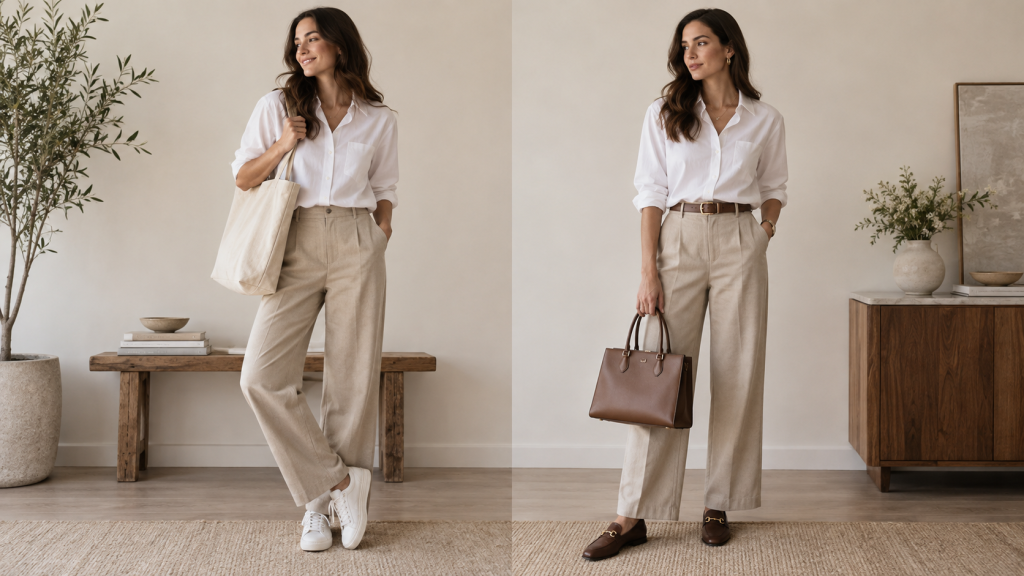
Jeans and a white shirt look casual with sneakers, polished with loafers, and more dressed up with heeled boots.
Accessories are also an easy way to include colors or trends without rebuilding your entire wardrobe.
Adjust Your Capsule for the Seasons
A capsule wardrobe does not have to remain identical all year.
If you live somewhere with noticeable seasonal changes, rotating clothes can make the system easier.
In summer, your wardrobe may include linen shirts, lightweight dresses, shorts, sandals, and cotton tops.
In winter, those pieces may be replaced by sweaters, heavier trousers, boots, coats, and thermal layers.
Store truly seasonal clothing separately if possible.
This keeps your everyday wardrobe from becoming crowded with pieces you cannot currently wear.
Some basics can remain year-round.
Jeans, shirts, sneakers, light jackets, and certain dresses can often transition between seasons with different layers.
Be Careful With Trends
Trends can be fun.
A capsule wardrobe does not mean you must avoid them completely.
The important question is whether the trend works with your existing wardrobe and whether you genuinely like it.
Before buying a trendy item, ask:
Can I style this at least three ways with clothes I already own?
Would I still want to wear it if it stopped appearing on social media next month?
Does it fit my normal lifestyle?
If the answer is yes, it may be a good addition.
If not, admire the trend without feeling obligated to own it.
Keep a Small “Maybe” Box
Some clothing decisions are difficult.
You may have an item you rarely wear but are not ready to donate.
Instead of forcing yourself to decide immediately, put questionable items into a box or separate section of the closet.
Leave them there for a month or two.
If you repeatedly think about one item and want to wear it, return it to your wardrobe.
If you completely forget that something exists, that tells you something too.
This method makes decluttering less emotional and prevents regret.
How Many Pieces Should a Capsule Wardrobe Have?
There is no perfect number.
For a beginner, somewhere around 30 to 40 everyday items can be a useful reference point, but you should not treat it as a target you must reach.
A person who wears a uniform to work may need fewer everyday clothes.
Someone who regularly moves between professional meetings, casual activities, and social events may need more.
Your climate also matters.
Four distinct seasons usually require more clothing than consistently warm weather.
Rather than counting everything, ask whether each item earns its place.
Do you wear it?
Does it fit?
Does it work with other clothes?
Does it suit your life?
If the answer is yes, the exact number becomes much less important.
Give Your Wardrobe Time to Evolve
Your first capsule wardrobe will probably not be perfect.
That is normal.
You may discover that you need more color.
You may realize that a supposedly essential item never gets worn.
Your work situation may change. Your climate may change. Your personal style may change.
A capsule wardrobe should evolve with you.
Review it every few months.
Notice what you wear constantly and what remains untouched.
Over time, these observations will help you make better buying decisions.
A Simple Beginner Capsule Wardrobe Example
If you want a starting point, a casual everyday capsule might look something like this:
Tops
- 3 basic T-shirts
- 2 button-down shirts
- 2 casual tops
- 2 sweaters or knit tops
Bottoms
- 2 pairs of jeans
- 2 pairs of trousers
- 1 skirt or alternative bottom
One-piece outfits
- 2 simple dresses
Layers
- 1 cardigan
- 1 casual jacket
- 1 blazer
- 1 seasonal coat
Shoes
- sneakers
- loafers or flats
- boots or sandals depending on the season
This is only an example.
You should change the categories and quantities based on how you actually dress.
Final Thoughts
Building a capsule wardrobe is less about owning fewer clothes and more about creating a wardrobe that works harder for you.
Start with what you already own.
Pay attention to the pieces you naturally reach for.
Choose colors that work together, focus on good fit, and look for items that can create several different outfits.
Most importantly, give yourself time.
You do not need to achieve a perfect minimalist closet in one weekend.
A useful wardrobe develops gradually as you learn what you wear, what you need, and what makes getting dressed feel easy.
The best capsule wardrobe is not the smallest one.
It is the one where opening your closet feels simple.