




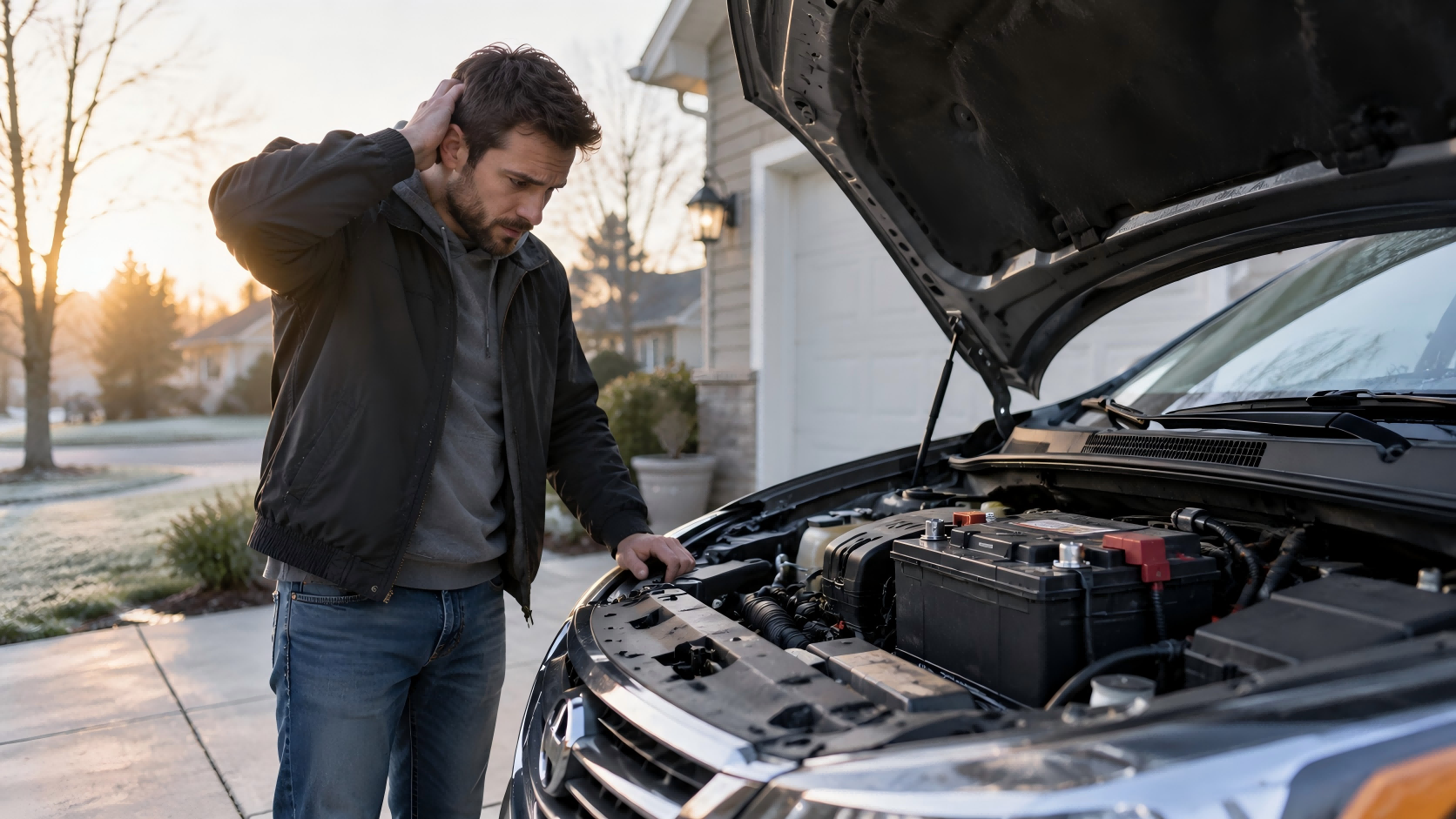
Few things are more frustrating than getting into your car in the morning, turning the key or pressing the start button, and hearing nothing but a click.
If the battery was working normally the night before but is dead by morning, something is probably draining it while the car is parked, the battery itself may be weak, or the charging system may not be doing its job properly.
A battery that dies overnight once can sometimes be explained by a light being left on. But if it keeps happening, the problem deserves a closer look.
Here are the most common reasons a car battery keeps dying overnight and how to narrow down the cause.
1. A Light or Accessory Is Staying On
This is one of the simplest and most common causes.
Even when the engine is off, some electrical components can continue drawing power from the battery.
Possible examples include:
- headlights
- interior dome lights
- glove box lights
- trunk lights
- vanity mirror lights
- aftermarket accessories
- phone chargers
Sometimes the problem is obvious. You may simply have left the headlights on.
Other times, it is harder to notice.
A trunk light, for example, may remain on because the latch switch is faulty. Since the trunk is closed, you may never realize the light is still drawing power.
The same can happen with a glove box light or interior light.
If the battery dies overnight, check every light and accessory before assuming the battery itself has failed.
2. The Battery Is Old
Car batteries do not last forever.
As a battery ages, its ability to hold a charge gradually decreases.
A battery that once had enough reserve capacity to sit overnight may eventually become weak enough that even a small electrical load drains it.
Many conventional car batteries last somewhere around three to five years, although lifespan can vary significantly depending on climate, driving habits, battery quality, and vehicle type.
Extreme heat can shorten battery life by increasing internal chemical deterioration.
Cold weather can also expose a weak battery because the engine requires more power to start.
If your battery is several years old and has begun dying repeatedly, age should be one of the first things you consider.
A battery test can usually determine whether it still has enough capacity to start the vehicle reliably.
3. You Have a Parasitic Battery Drain
Some electrical draw while the car is off is normal.
Modern vehicles use small amounts of power to maintain systems such as:
- clocks
- alarms
- computer memory
- keyless entry
- security systems
This normal draw should not drain a healthy battery overnight.
A parasitic drain happens when a component continues using more electricity than it should after the vehicle has been turned off.
Common causes include:
- faulty relays
- malfunctioning control modules
- aftermarket stereos
- dash cameras
- GPS trackers
- alarm systems
- charging adapters
- poorly installed accessories
A parasitic drain may be small enough that the car works normally during the day but leaves the battery too weak to start after sitting overnight.
Finding the exact source usually requires testing the electrical system with a multimeter or professional diagnostic equipment.
4. The Alternator Is Not Charging the Battery Properly
The battery starts the engine, but the alternator keeps the battery charged while the engine is running.
If the alternator is failing, the battery may never fully recharge after starting the car.
You may drive home believing everything is fine, park the vehicle, and discover the battery is dead the next morning.
Possible signs of a charging-system problem include:
- battery warning light on the dashboard
- dim headlights
- flickering interior lights
- electrical accessories behaving strangely
- difficulty starting
- repeated dead batteries
However, alternator problems do not always produce obvious symptoms.
A weak alternator may provide enough power to keep the engine running but not enough to restore the battery fully.
Testing charging voltage can help determine whether the alternator is operating correctly.
5. Loose or Corroded Battery Connections
A battery can be healthy and still cause starting problems if the electrical connections are poor.
Battery terminals can loosen over time or develop corrosion.
Corrosion often appears as a white, blue, or greenish buildup around the battery posts and cable ends.
Poor connections can prevent the battery from:
- delivering enough power to the starter
- receiving a full charge from the alternator
- maintaining consistent electrical contact
This can sometimes make the problem look like an overnight battery drain.
Check that the terminals are clean and securely attached.
If you are cleaning battery terminals yourself, follow appropriate safety precautions and avoid allowing tools to bridge the positive and negative terminals.
6. You Only Take Short Trips
A weak battery may not have enough time to recover if you mostly drive short distances.
Starting the engine requires a large burst of electrical power.
The alternator then needs time to replace that energy.
If your typical trip is only a few minutes, especially in heavy traffic, the battery may gradually lose charge over several days.
This is more likely if you also use several electrical systems during those trips, such as:
- air conditioning
- heated seats
- headlights
- rear defroster
- audio system
Eventually, the battery may become weak enough that it cannot start the vehicle after sitting overnight.
Occasional longer drives may help if the battery and charging system are otherwise healthy.
7. Extreme Temperatures Are Affecting the Battery
Weather can make battery problems much more noticeable.
Hot conditions can accelerate battery aging and increase fluid loss in certain battery designs.
Cold conditions reduce the battery’s ability to produce power while simultaneously making the engine harder to crank.
This means a battery that seems fine during mild weather may suddenly begin failing during a heat wave or cold spell.
If overnight battery problems happen mainly during extreme temperatures, the battery may already be near the end of its useful life.
8. A Relay Is Stuck
Relays control electrical circuits throughout the vehicle.
When the car is switched off, most relays should stop supplying power to their circuits.
A relay that becomes stuck can keep a component running after the engine is off.
Depending on the circuit, this may involve:
- cooling fans
- fuel system components
- lights
- heating systems
- electronic modules
Some of these problems are easy to notice.
Others may operate quietly and drain the battery without any obvious sign.
A technician can often identify a faulty relay during a parasitic draw test.
9. Aftermarket Electronics Are Draining Power
Aftermarket electronics are a frequent source of battery drain.
Examples include:
- dash cameras
- aftermarket stereos
- amplifiers
- remote-start systems
- alarms
- GPS trackers
- USB chargers
- decorative lighting
These devices may be installed incorrectly or connected to a circuit that remains powered when the vehicle is off.
Some dash cameras, for example, are intentionally designed to operate in parking mode.
That can be useful, but if the system is not configured correctly, it may continue recording until the battery becomes too weak to start the car.
If battery problems began shortly after installing an accessory, that device should be one of the first things checked.
10. A Door or Trunk Switch Is Faulty
Modern cars use switches or sensors to determine whether a door, trunk, or hood is open.
If one of these switches fails, the vehicle may think a door is still open.
That can keep interior lights or electronic systems active longer than normal.
You might notice:
- an interior light staying on
- a door-open warning on the dashboard
- an alarm behaving strangely
- electronics taking unusually long to shut down
A faulty switch can create a slow drain that becomes noticeable only after the vehicle sits for several hours.
11. The Battery Was Never Fully Recharged
If the battery recently went flat and was jump-started, it may still be undercharged.
A short drive after a jump start is not always enough to restore a deeply discharged battery.
The vehicle may restart later that day but fail again the next morning.
A proper battery charger may be needed to bring the battery back to a full state of charge.
If the battery repeatedly goes flat even after being fully charged, there is likely an underlying problem.
How to Tell Whether the Battery or Charging System Is the Problem
A few simple observations can help narrow things down.
If the battery is old and struggles to start the engine even after a long drive, the battery itself may be weak.
If a newer battery repeatedly dies, look more closely at parasitic drain or alternator problems.
If the vehicle starts after a jump but soon loses electrical power while driving, the alternator may be involved.
A professional battery and charging-system test is usually the fastest way to separate these possibilities.
What Is a Parasitic Draw Test?
A parasitic draw test measures how much electrical current the vehicle uses while it is switched off.
The vehicle usually needs time to enter sleep mode before the measurement becomes meaningful.
A technician can then determine whether the current draw is unusually high.
If it is, individual fuses can be tested to identify which circuit is responsible.
This process can lead to the faulty component, relay, module, or accessory.
It is one of the most useful tests when a healthy battery keeps dying overnight.
Can a Battery Die Overnight From a Small Drain?
Yes.
A small electrical drain may not matter if the battery is new and fully charged.
But if the battery is older, partially discharged, or exposed to cold temperatures, the same drain may be enough to prevent the car from starting in the morning.
That is why multiple small issues can sometimes combine.
For example, an aging battery plus a dash camera plus repeated short trips may create a problem even though none of those factors would necessarily cause failure on its own.
What Should You Check First?
If your battery keeps dying overnight, start with the simplest possibilities.
Check whether any lights or accessories remain on.
Look at the battery terminals for looseness or corrosion.
Consider how old the battery is.
Think about whether any electronics were installed recently.
Then have the battery and charging system tested if the problem continues.
If those tests are normal, a parasitic draw test may be the next step.
Final Thoughts
A car battery that keeps dying overnight usually has an underlying cause.
Sometimes it is as simple as a light staying on.
Other times, the battery is worn out, the alternator is not charging properly, or an electrical component continues drawing power after the vehicle is parked.
The important thing is not to keep jump-starting the car and ignoring the problem.
Repeated deep discharges can shorten battery life and may eventually leave you stranded.
Start with the easy checks, test the battery and charging system, and investigate parasitic drain if necessary.
Once the actual cause is identified, the problem is usually much easier to solve.